In December 1777, during the Revolutionary War of the United States, the struggling Continental Army retreated to Valley Forge, Pennsylvania, with about 7,000 of 9,000 Continentals surviving. In March 1778, General George Washington praised the soldiers who persevered, describing how the soldiers’ fortitude “clearly prove[d] them worthy the enviable privelege of contending for the rights of human nature[.]”
 More than 247 years later, in June, 2025, a different group of soldiers quartered at Valley Forge. But instead of building their martial strength, the present-day recruits trained to become Religious Liberty Fellows. Their mission: to gain tools and knowledge to effectively advocate for religious liberty in their communities and throughout their careers.
The J. Reuben Clark Law Society’s Religious Liberty Fellowship originated in 2019 after a small group of JRCLS members sought to offer law students experiential opportunities in the religious liberty sphere. Through the tireless efforts of these volunteers, a 36-hour experience in Washington, D.C., with a handful of students has grown into a five-day program at Valley Forge, with 29 Fellows participating in the 2025 program, the largest class yet.
Partnering with the Founding Forward organization at its Valley Forge campus, the Fellowship includes training from judges, members of Congress, scholars, litigators, and policymakers, all overseen by members of the Law Society. This year, Fellows had the privilege of hearing from an impressive lineup of speakers, including:
-
Tyler Deaton (Allegiance Strategies)
-
Benjamin Fleshman (Becket)
-
Josh McDaniel (Harvard Law School)
-
U.S. Representative Celeste Maloy (Utah)
-
Michael Moreland (Villanova University Law School)
-
Gene Schaerr (Schaerr Jaffe)
-
Tim Shultz (First Amendment Partnership)
-
Hannah Smith (International Center for Law and Religion Studies)
-
Matthew Richards (Office of General Counsel for the Church of Jesus Christ of Latter-day Saints)
-
Honorable Thomas I. Vanaskie (Third Circuit Court of Appeals, retired)
 The program is open to current law students and recent law grads, along with other graduate and undergraduate students interested in law and policy.
Under the direction of Tanner Bean and Annika Boone Barkdull, JRCLS volunteer members, and Amy Parker, JRCLS Events Manager, the Fellowship strives to identify and equip leaders across various interfaith groups, especially religious minorities, with religious training and tools. After all, according to Mr. Bean, a society in which faith and freedom of choice flourish is best created when those who disagree with each other build bridges and find common ground. Fellows saw examples of individuals finding common ground during their visit to Independence Hall in Philadelphia, a reminder of the power that comes when diverse individuals unite to improve the lives of all.
 As Ms. Barkdull describes, the Fellows learn more than just the technical aspects of religious freedom. Fellows also receive hands-on training, including workshopping hypotheticals, honing action plans, and coming to understand that true religious liberty is about creating a society in which faith and freedom of choice flourish. To that end, the Fellows’ action plans are vital.
Some of the 2025 Fellows’ initiatives include creating a religious liberty triage hotline, executing social media campaigns to humanize religious liberty, and working with refugees.
 Importantly, the Fellowship does not end after attendees leave Valley Forge. Unlike the Continentals who had fixed terms of enlistment, there is no “end state” to being a Religious Liberty Fellow. Ms. Barkdull explains: “The week Fellows spend together is just the beginning of a lifelong association of those who believe in and advocate for religious freedom.” The 2025 cohort joins a broader alumni network of members in communities across the world.
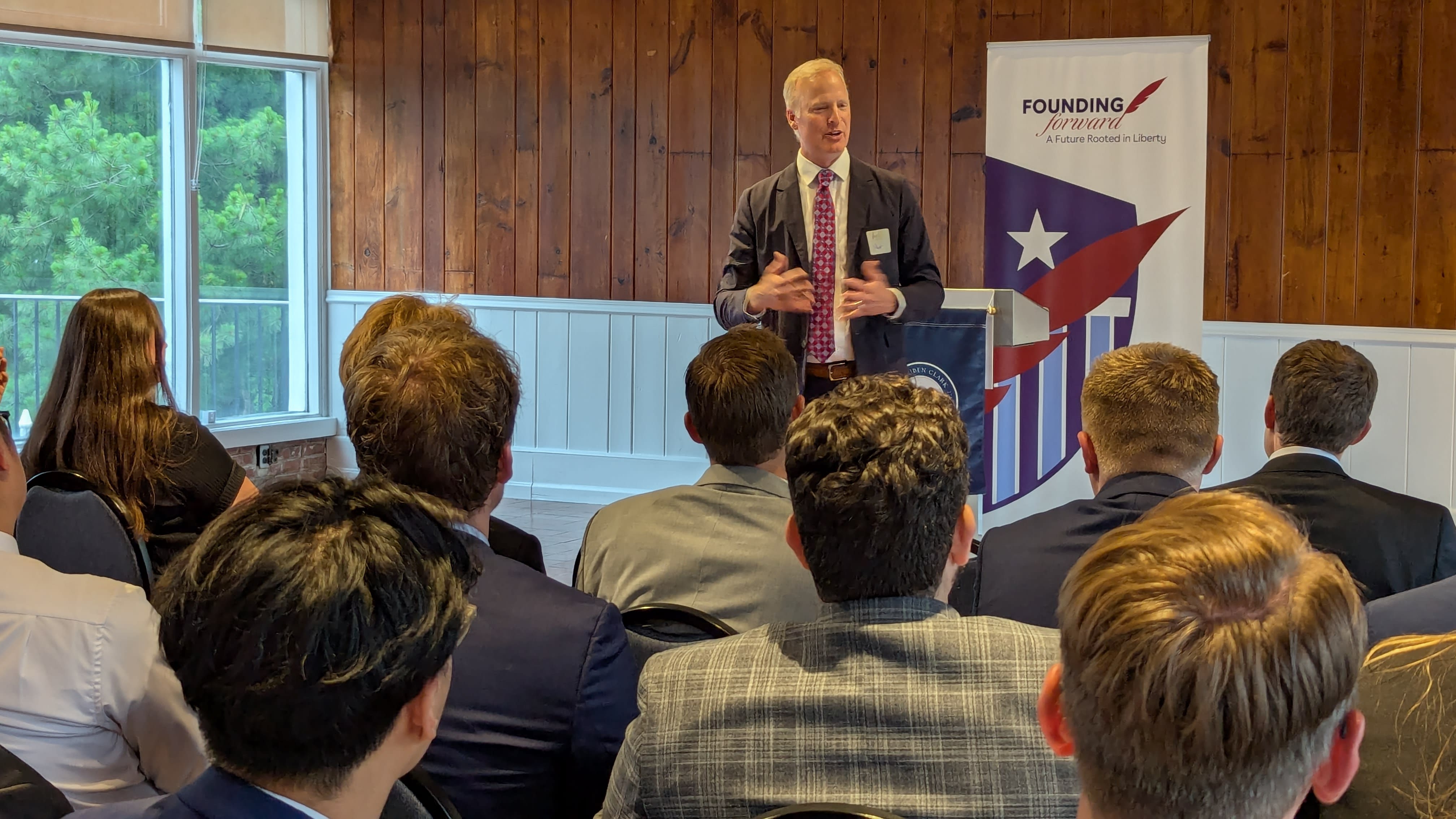 In June 1778, a smaller but more disciplined force left Valley Forge. Three years later, the Continentals accepted Lord Cornwallis’s surrender at Yorktown. The Religious Liberty Fellowship also has a lofty aim: to be the rallying point for members of religious groups wanting to promote religious liberty grounded in peacemaking.
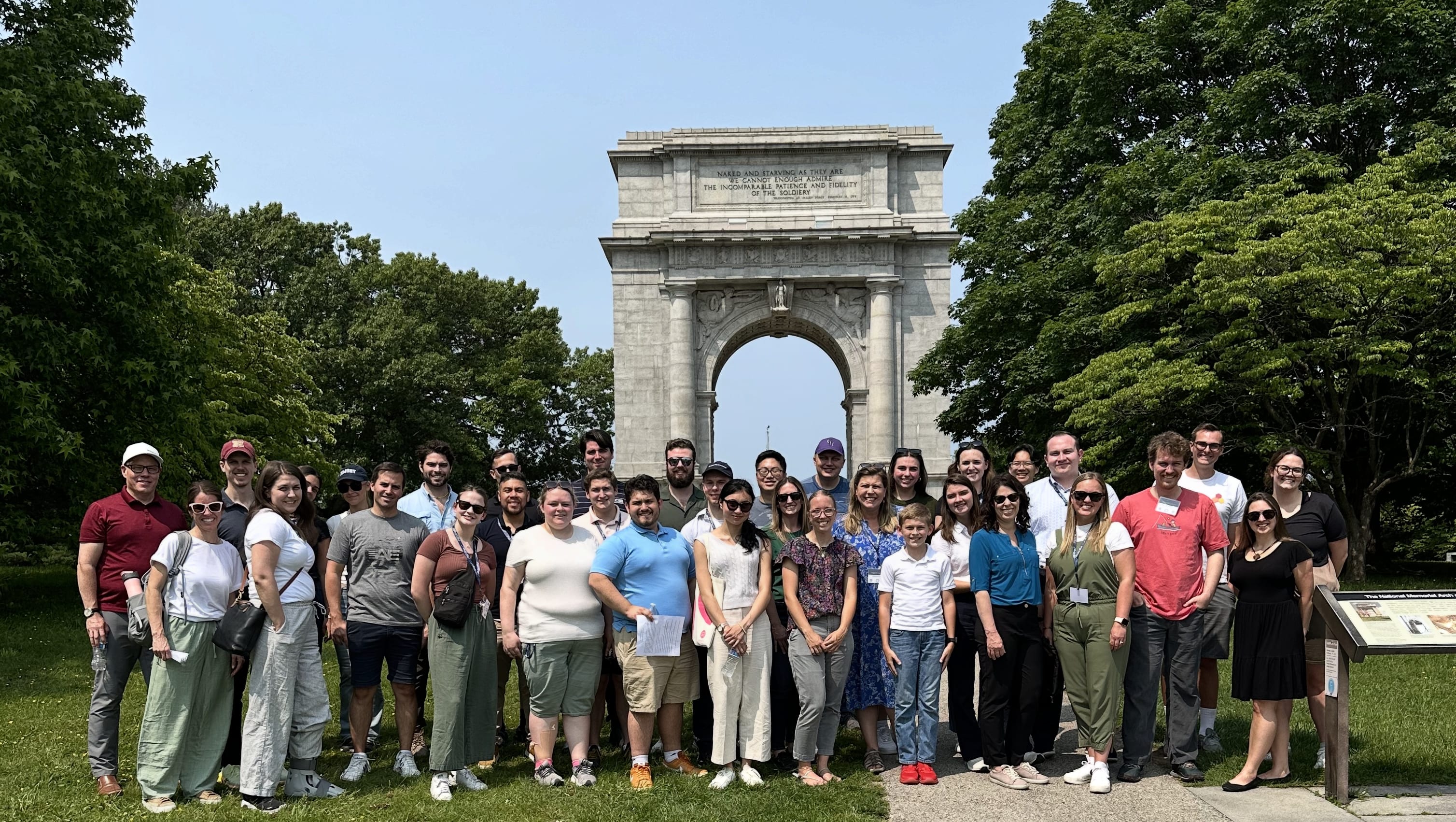 Indeed, with the inspired Fellowship leadership team leading out, and the 2025 Fellows’ commitment and plan to make ongoing contributions to religious liberty in their communities, the future of the Religious Liberty Fellowship “Tis well.”
The application window for the 2026 Religious Liberty Fellowship opens soon! See the JRCLS Religious Freedom Committee page in August/September 2025 for more information.
Author: Christopher Melling
About the Author
Major Christopher F. Melling is a trial counsel in the United States Marine Corps. He is licensed to practice law in the State of Utah. He served as a law clerk for the Honorable David Barlow, U.S. District Court for the District of Utah, and a law clerk for the Honorable Ryan D. Nelson, U.S. Court of Appeals for the Ninth Circuit. Maj. Melling graduated summa cum laude and Order of the Coif from BYU Law School in 2022.
Christopher studied History and Spanish at the United States Naval Academy. He graduated in 2006 with honors and was commissioned in the United States Marine Corps. He qualified as a naval aviator and served tours as an F/A-18 pilot with the Silver Eagles of Marine Fighter Attack Squadron (VMFA) 115 and the Thunderbolts of VMFA-251. He deployed twice to Japan and twice to the Middle East. In addition to flying over 1200 accident-free hours in the F/A-18, his duties included operations officer, administrative officer, quality assurance officer, and training officer.
Maj. Melling's other Marine Corps specialties involved ground operations. He graduated from the Tactical Air Control Party school in 2013 and the Marine Corps' Weapons and Tactics Instructor Course and served as an air officer with 2d Air Naval Gunfire Liaison Company (ANGLICO). With ANGLICO, Christopher deployed to the United Kingdom, Morocco, Brazil, Slovenia, and served as a training officer and team leader. He also deployed to the Combined Air and Space Operations Center at Al Udeid, Qatar, as a strategic air planner.
Maj. Melling was honorably discharged in 2019 and enrolled at the J. Reuben Clark Law School at Brigham Young University. During law school, Christopher was Executive Editor of the BYU Law Review, President of the Trial Advocacy Team, and Vice President of the BYU Chapter of the Federalist Society. He also served as a judicial extern for the Honorable Thomas R. Lee, then associate chief justice on the Utah Supreme Court. His awards included the A.H. Christensen Memorial Award for Excellence in Advocacy and Hugh B. Brown Barrister's Award for High Standards and Performance in the Classroom. His military decorations include the Navy and Marine Corps Commendation Medal (three awards), and the Navy and Marine Corps Achievement Medal.
